
Dtv Gov Maps File

Darwin is the open source operating system from Apple that forms the base for macOS. PureDarwin is a community project that fills in the gaps to make Darwin usable.

PureDarwin

The PureDarwin project, which aims to make Apple's open-source Darwin OS more usable, is still actively maintained as of 2024. While development has been relatively slow, the project continues to progress through community contributions. PureDarwin focuses on creating a usable bootable system that is independent of macOS components, relying solely on Darwin and other open-source tools.

The project's main focus is providing useful documentation and making it easier for developers and open-source enthusiasts to engage with Darwin.
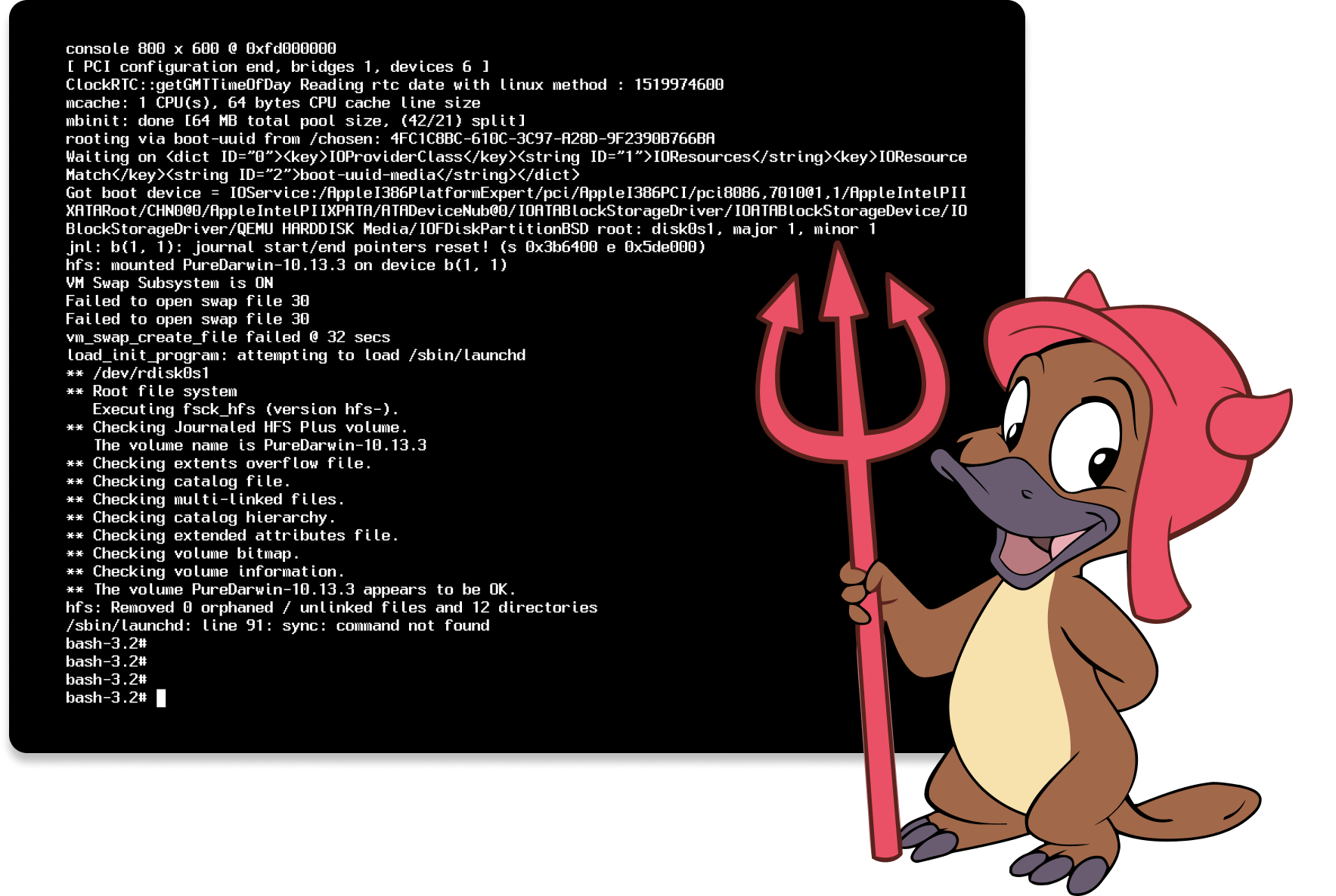
Test Build

The PD-17.4 Test Build is a minimal system, unlike previous versions like PureDarwin Xmas with a graphical interface. It’s distributed as a virtual machine disk (VMDK) and runs via software like QEMU.

Due to the lack of proprietary macOS components, the community must develop alternatives, leaving elements like network drivers and hardware support incomplete. This build is intended for developers and open-source enthusiasts to explore Darwin development outside of macOS​.

Based on Darwin 17, which corresponds to macOS High Sierra (10.13.x).

PD-17.4 Test Build
dtv gov maps

Dtv Gov Maps File

The transition from Analog to Digital Television (DTV) in the United States (completed in 2009) represented one of the most significant overhauls of public spectrum usage in history. Central to this transition were the "DTV Gov Maps" – a suite of interactive and static cartographic tools produced primarily by the Federal Communications Commission (FCC) in conjunction with the National Telecommunications and Information Administration (NTIA). This paper provides a long-form investigation into the technical creation, policy function, public reception, and legacy of these maps. It argues that while the DTV Gov Maps served as a crucial tool for consumer education and regulatory enforcement, they also exposed a fundamental tension between predicted mathematical coverage and real-world reception, leading to ongoing policy adjustments, including the TV Viewer Saved Act and the rise of NextGen TV (ATSC 3.0). 1. Introduction On June 12, 2009, full-power television stations in the United States ceased analog broadcasts, permanently switching to a digital format mandated by the Digital Television and Public Safety Act of 2005. This transition freed up valuable low-band spectrum (the 700 MHz band) for emergency services and mobile broadband. However, for millions of Americans—particularly those in rural, mountainous, or fringe suburban areas—the switch promised either better picture quality or a blank screen.

In the months leading up to the transition, the FCC launched a massive public education campaign. The centerpiece of this campaign was the (officially part of the FCC’s DTV website, transition.fcc.gov). These maps allowed users to enter their address or zip code and receive a color-coded prediction of which local digital stations they could receive with a standard rooftop or indoor antenna. dtv gov maps

Navigating the Digital Spectrum: A Comprehensive Analysis of Government-Generated DTV Coverage Maps (DTV Gov Maps) The transition from Analog to Digital Television (DTV)