Halide Mark II: now for iOS 18, with Process Zero
Updated for the latest and greatest devices and built for the newest version of iOS.
lux.camera
Now with Process Zero - for zero-AI, minimally processed shots.
Featuring the best photography tools on iOS, built-in lessons, Lock Screen access, and many more features for getting the best shot.

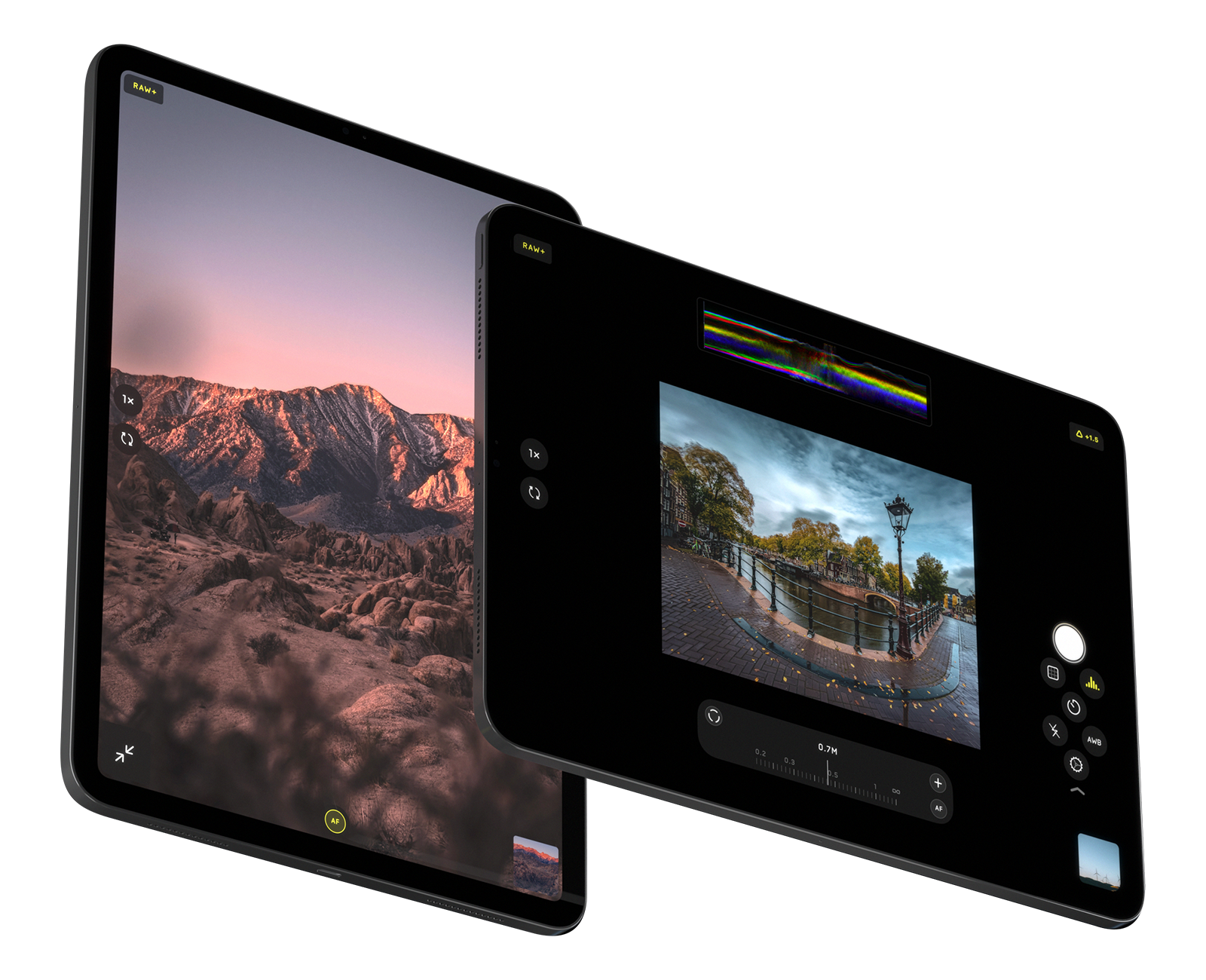
Meet Halide for iPad. Packed with all the powerful features of Halide for iPhone and a few special ones for better photography on big screens.
Enjoy the brand-new, completely custom iPad interface and features like Pro View to get a scaled-down, unobstructed view of your shot with plenty of space for your Pro tools and readouts.

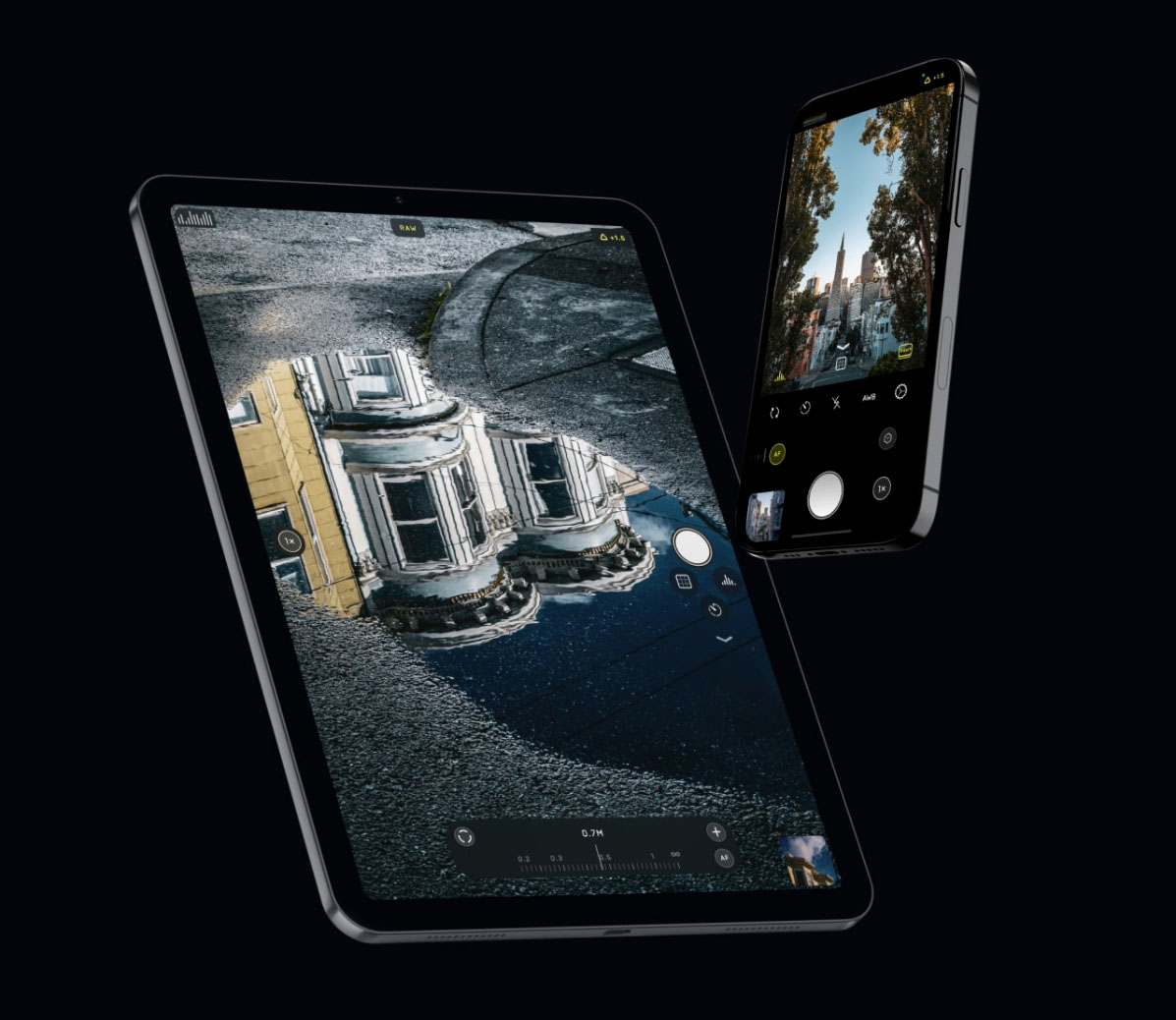
Always up to date — now with iOS 18 Lock Screen Capture. Halide packs intuitive gestures, gorgeous details, and effortless ease of use.
Designed to be used with one hand on all phones without compromising on power.
New in Mark II: Edge gestures for mode switching. Tactile Touch enables and disables focus and exposure aids as you need them. Designed with three new, custom typefaces.
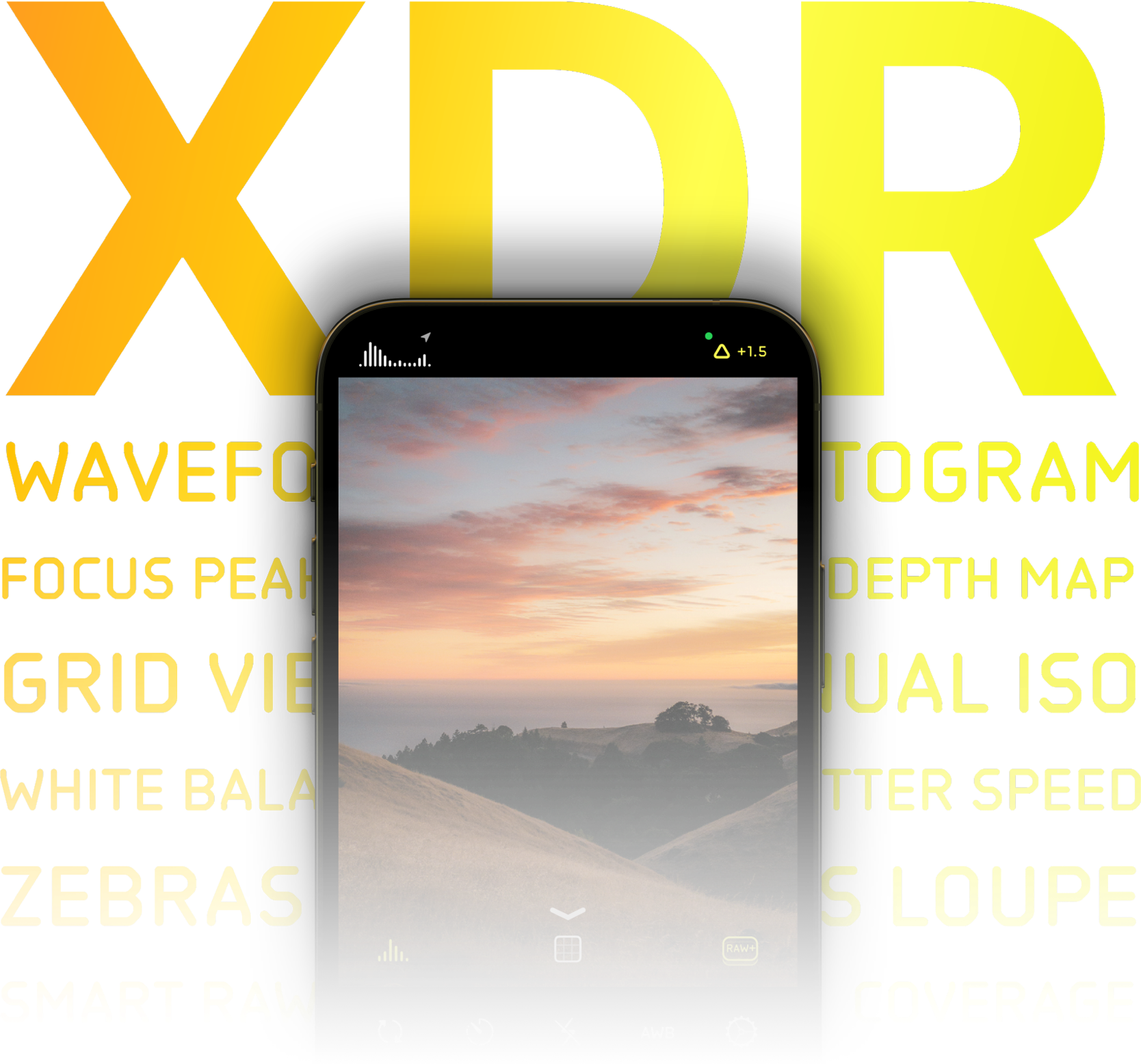
Halide Mark II packs the best pro camera tools on the App Store.
Check for accurate exposures with the new extended dynamic range (XDR) 14-bit color zebras and waveforms.
Use your ideal histogram with large and small displays featuring monochrome and color options. Perfect manual focus with automatic enhanced focus peaking and a new focus loupe.
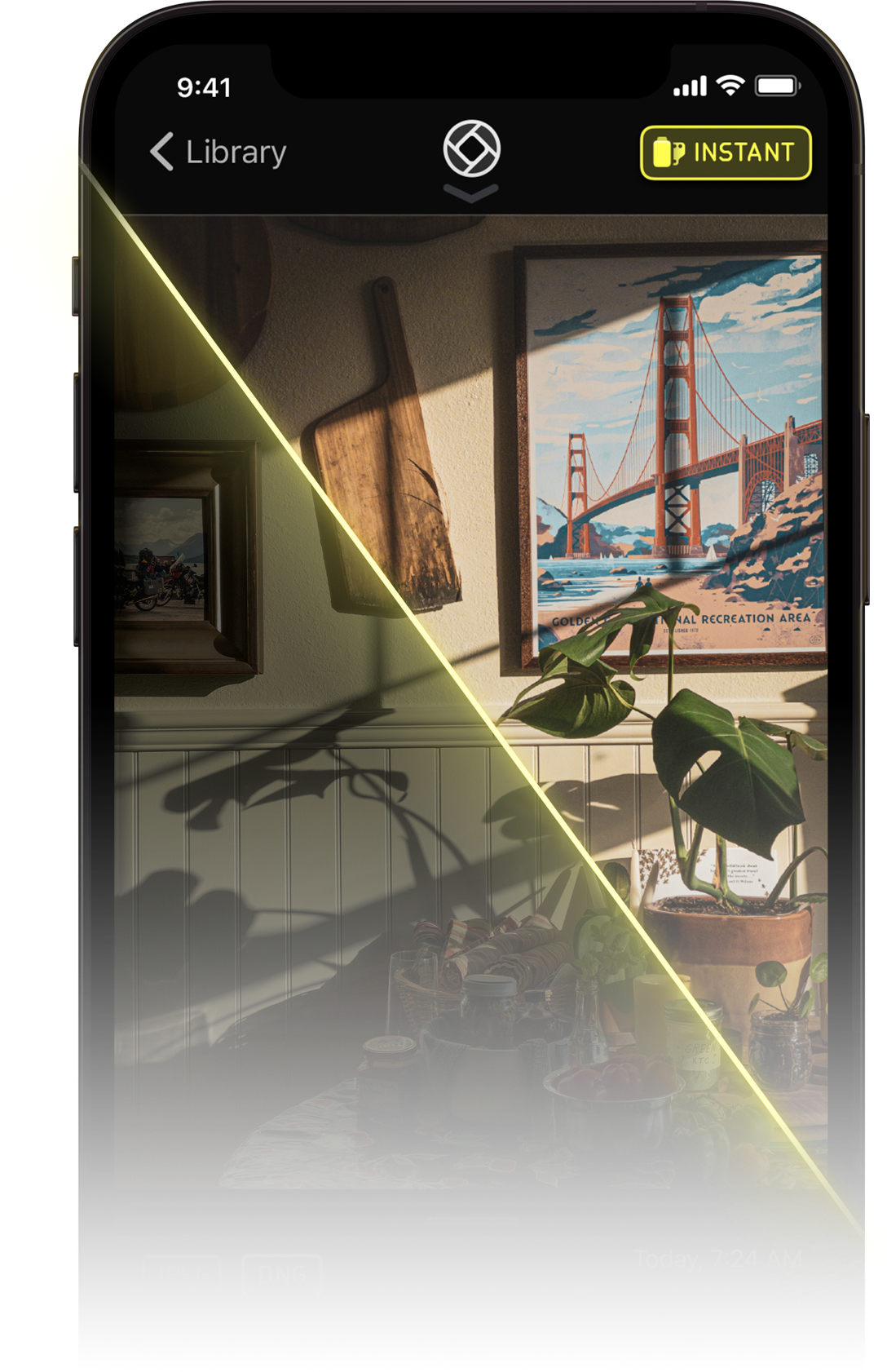
You might love your iPhone's super-smart, AI based image processing, or you might not.
That's why Halide lets you pick your processing — even between shots. Choose from iPhone's default image processing, or reduced processing, or choose Process Zero: a single-shot RAW capture mode that gives you beautiful film-like shots with minimal processing and zero AI right out of the camera.
The new Image Lab lets you re-develop the shot later for different exposures, or you can edit your photo in an image editor with huge flexibility — because Halide saves raw sensor data along with your shot.


Halide was designed with our favorite object in mind: the delightfully tactile and beautiful film camera, without compromising on the flexibility and power of mobile photography.
Gestures are modeled after the intuitive manipulation of dials: swiping up and down for exposure, and left and right for focus. The interface is simple and free of clutter, letting you focus on your artistic process.
We pay homage to the design heritage of more than a century of camera design with completely custom typefaces and typography throughout based on etched type on camera bodies and lenses.
In conclusion, Nirmal Pathak Ki Ghar Wapsi is not merely a web series; it is a mirror held up to a generation caught between two Indias. It refuses to offer easy resolutions or moral high grounds. Nirmal does not “convert” his father, nor does he abandon his own beliefs. Instead, the homecoming becomes an education in humility—a realization that identity is not chosen but inherited, negotiated, and lived. The series’ quiet power lies in its ability to make the audience uncomfortable, to suggest that the distance between a modern, liberal self and a traditional, conservative home is not measured in kilometers but in the courage to understand what you have left behind. For anyone who has ever felt like a tourist in their own childhood home, Nirmal’s journey is both a warning and a reluctant embrace of the inescapable truth: you can leave home, but home never quite leaves you.
The series is also a poignant commentary on the generational trauma of unspoken expectations. Nirmal’s father wanted him to become an engineer or a civil servant—a traditional marker of success. Instead, Nirmal became a “wallah” of an obscure discipline, a point of bitter disappointment that fuels their estrangement. The father’s love is expressed not through warmth but through rigid discipline and a fierce protection of family honor, a language Nirmal has forgotten how to read. The series beautifully captures how the Indian middle-class family often weaponizes silence. Long, lingering shots of characters sitting in courtyards or traveling in cars convey more than dialogues could: the weight of a disapproving glance, the agony of a son watching his father’s health decline while their ideological chasm remains unbridged. Nirmal Pathak Ki Ghar Wapsi -2022- Web Series
Furthermore, the web series serves as a subtle critique of the urban-rural divide in India. The metropolitan audience, much like Nirmal, is invited to laugh at the quaintness of small-town life—the quirky relatives, the inefficient bureaucracy, the obsession with “log kya kahenge” (what will people say). But as the narrative progresses, it becomes clear that the town’s “backwardness” is a matter of perspective. Ratighat’s raw, unpretentious honesty stands in stark contrast to the performative wokeness of Delhi’s academic circles. Nirmal’s city-bred solutions to local problems fail spectacularly, forcing him to acknowledge that his intellectual toolbox is useless in the face of lived reality. The series thus reverses the gaze: it is Nirmal, not his father, who is provincial in his rigid adherence to ideological purity. In conclusion, Nirmal Pathak Ki Ghar Wapsi is





%!s(int=2026) © %!d(string=Nova Tower)