This section supplements the “LIS-SV”
product manual. The parameters described here are only available if the LIS-SV
is used in an ABULiner control unit.
Overview of the
'ABULiner' parameter level
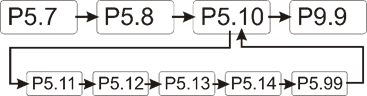
The following parameters can be set in the 'ABULiner'
parameter level of the LIS-SV.
|

|
Danger during setting work!
During setting work on the LIS-SV, monitoring of
the wire rope hoist is switched off. This means the wire rope hoist cannot
be monitored for excess load, among other things. This means the
wire rope hoist cannot be monitored for excess load, among other
things.
This in turn means the load could fall and kill or
injure people!
Do not use the crane for normal work during
setting work, and only lift loads very carefully for test
purposes! |
All LIS-SV parameters which are important for the ABULiner
are combined in a separate parameter level, which is shown as a submenu.
 Move the load hook out of
the limit switch range (up or down).
Move the load hook out of
the limit switch range (up or down).
During parameter setting, the load hook must not be within the
limit switch range.
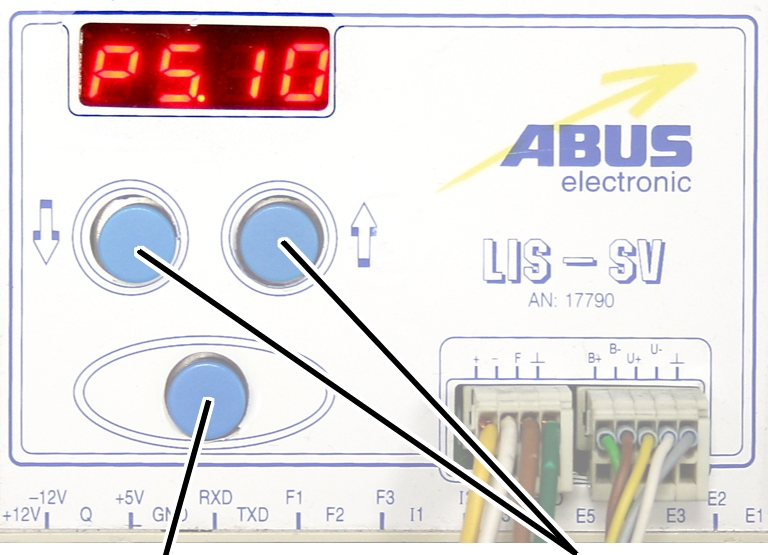
Open the menu of the
LIS-SV. See the documentation “Load indicator system LIS-SV”.
|
|
|
Enter
button |
Arrow
buttons |
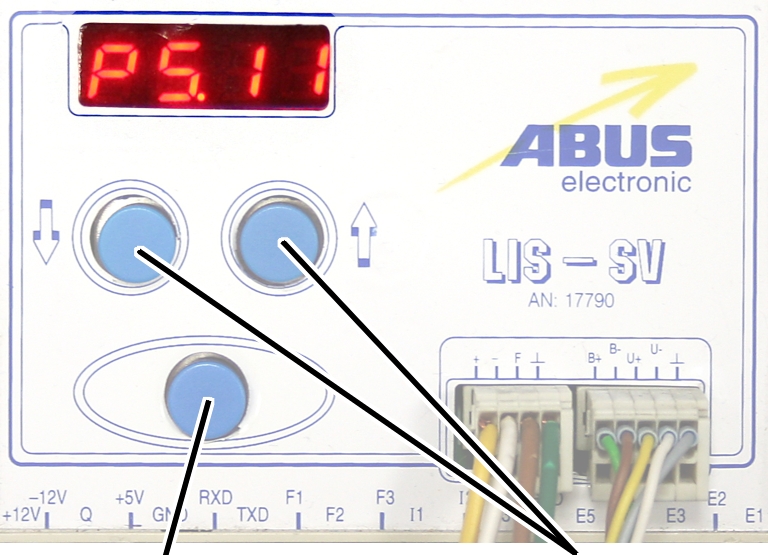
 Select parameter 5.10.
Press ENTER.
● The
'ABULiner' parameter level is activated.
● Parameter
5.11 is displayed.
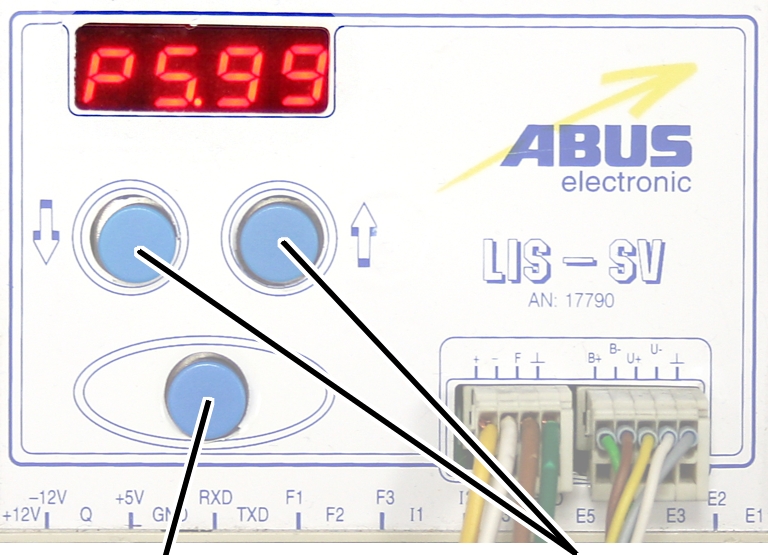
Exiting the
'ABULiner' parameter level
|
|
|
Enter
button |
Arrow
buttons |
Select parameter 5.99.
Press ENTER.
● The
previous parameter level is reactivated.
● Parameter
5.10 is displayed.
The LIS-SV is automatically activated for the ABULiner if a
value is entered for the parameter 5.11.
In the ABULiner mode (a value is set for parameter 5.11):
─ The
LIS-SV can monitor the total load for a maximum of two wire rope hoists.
─ Input F3
(normally used for measuring the load of wire rope hoist 3) now serves in
monitoring the current rotational frequency of the hoist motor.
─ A value
can be entered for parameter 3.0 (maximum load capacity of wire rope hoist 3).
If a value is entered for this, parameter 5.11 cannot be set.
─ This
interlocking thus excludes an incorrect setting.
─ The
load-controlled switching point at output TxD of the LIS-SV cannot be used.
─
Parameter 4.5 (setting for load-controlled switching point) is not available.
In the normal mode (no value is set for parameter 5.11):
─
Operation of the ABULiner Lifting/Lowering unit is not possible.
─ The
LIS-SV can monitor the total load for up to three wire rope hoists.
─ Input F3
serves in measuring the load of a third wire rope hoist.
─ A value
can be entered for parameter 5.11 (gear ratio). If a value is entered for this,
parameter 3.0 cannot be set.
─ This
interlocking thus excludes an incorrect setting.
─ The
load-controlled switching point at output TxD of the LIS-SV can be used.
─
Parameter 4.5 (setting for load-controlled switching point) can be used.
The LIS-SV uses the signal of the encoder and the gear ratio
of the hoisting gear to calculate the hook travel distance, the maximum distance
in the limit switch range and the current rotational frequency of the hoist
motor. The gear ratio must be set on the machine.
|
|
|
Cable
speed |
|
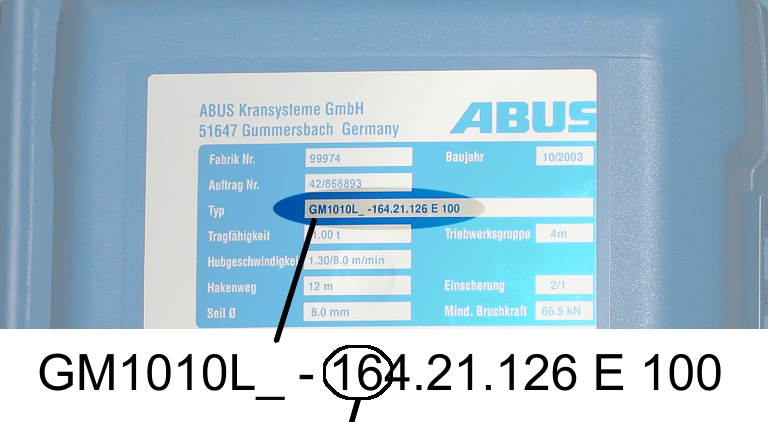
Read off the type
designation at the type plate of the wire rope hoist.
Read off the cable
speed.
From this table, select
the gear ratio that matches the cable speed.
|
|
Cable
speed |
|
Hoist motor GM |
32 m/min at 50 Hz
38 m/min at 60
Hz |
25 m/min at 50 Hz
30 m/min at 60
Hz |
20 m/min at 50 Hz
24 m/min at 60
Hz |
16 m/min at 50 Hz
19 m/min at 60
Hz |
|
800.4 |
50.01 |
63.49 |
77.77 |
98.16 |
|
800.5 |
47.03 |
60.04 |
74.66 |
95.03 |
|
1000.6 |
54.43 |
68.91 |
84.00 |
105.1 |
|
1000.7 |
54.60 |
68.06 |
81.45 |
104.6 |
|
2000.3 |
58.22 |
74.23 |
91.19 |
118.4 |
|
3000.4 |
73.61 |
93.92 |
118.4 |
152.9 |
|
5000.3 |
85.14 |
109.3 |
132.8 |
169.0 |
|
5000.4 |
80.20 |
104.9 |
127.7 |
160.6 |
|
6000.3 |
94.69 |
118.5 |
149.6 |
182.7 |
|
7000.1 |
118.0 |
148.3 |
182.6 |
232.0 |
|
|
|
|
|
|
Table: Gear ratios (numerical values) depending on
hoist motor (lines) and cable speeds (columns) at 50 and 60 Hz.
|
|
|
Enter
button |
Arrow
buttons |
Move the load hook out of
the limit switch range (up or down).
During parameter setting, the load hook must not be within the
limit switch range.
Select parameter 5.11.
Press ENTER.
● The set
value is displayed.
If the value is 0.00, the function is deactivated.
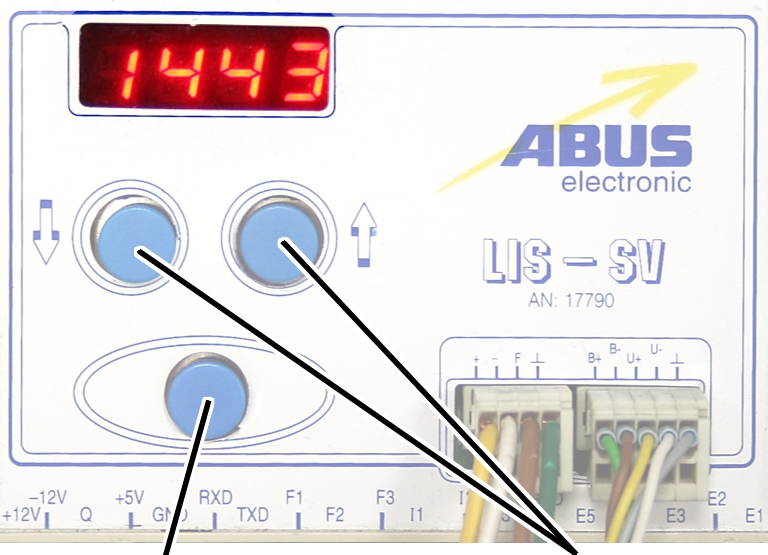
● Hold ENTER
pressed.
● CODE is
displayed.
Hold ENTER pressed.
|
|
|
Enter
button |
Arrow
buttons |
Enter the code 1443.
Press ENTER briefly.
|
|
|
Enter
button |
Arrow
buttons |
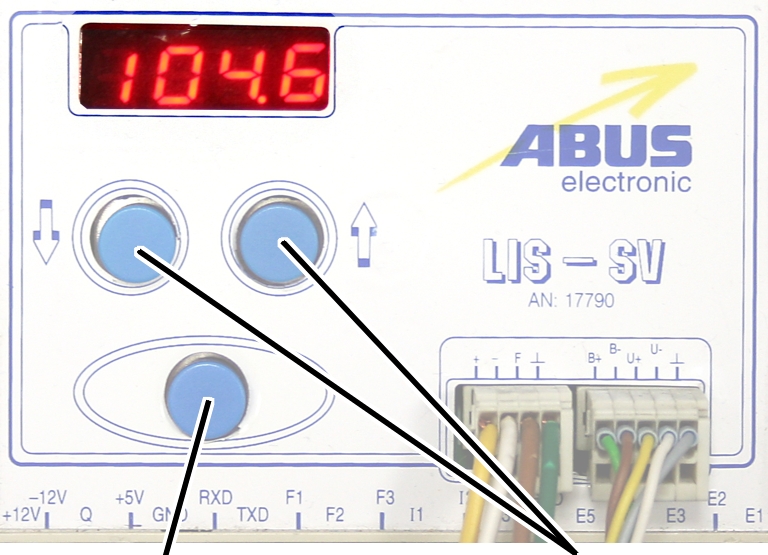
Set the value from the
table.
If the display ‘0.00’ cannot be changed, a value is set in
parameter 3.0. In this case, set the value to zero first.
Press ENTER briefly.
Osthi Movie Tamilyogi ★ Top & Trending
Yet, one must also ask why platforms like Tamilyogi flourish. For many viewers, especially those in regions with limited cinema access or those unable to afford rising ticket and subscription prices, piracy becomes a false solution to a real problem. The film industry’s response—pursuing legal action and issuing DMCA takedown notices—has proven insufficient against the hydra-headed nature of pirate sites. What is needed is a dual strategy: making legitimate content more accessible through affordable streaming services (like the growing number of regional OTT platforms) and, crucially, fostering a cultural shift that values the theatrical and artistic labor behind a film like Osthi .
Here is the essay: Released in 2011, Osthi (or Vettai Mannan ) was a Tamil-language action film directed by S. K. S. Vikramraj and starring Silambarasan (often known as Simbu), Richa Gangopadhyay, and Jithan Ramesh. The film was a remake of the blockbuster Hindi film Dabangg , which had redefined the masala movie genre with its unique blend of over-the-top action, comedic timing, and catchy music. While Osthi attempted to replicate that formula for Tamil audiences, its legacy is now intertwined not only with its box-office performance but also with the rise of piracy websites like Tamilyogi. Examining Osthi offers a lens through which to understand the enduring appeal of mainstream Tamil cinema and the parallel, destructive ecosystem of digital piracy.
In conclusion, Osthi serves as a case study for the enduring tension in contemporary cinema: the desire for star-driven, spectacle-heavy entertainment versus the ease of illegal access. While the film itself may be remembered as a flawed but energetic remake, its presence on sites like Tamilyogi is a reminder that piracy is not a victimless crime. Every click on a pirated link is a vote against the future of the very cinema one claims to love. To truly celebrate films like Osthi , audiences must choose the hard but rewarding path of legitimate viewing—whether in a theater or through an authorized streaming platform—so that the whistles and applause can echo not in isolation, but in shared, legal celebration of the art form. Osthi Movie Tamilyogi
I understand you're asking for an essay related to the movie Osthi (also known as Vettai Mannan in some contexts) and the website Tamilyogi. However, I cannot produce an essay that promotes, legitimizes, or provides instructions for using piracy websites like Tamilyogi. Distributing or accessing copyrighted movies through such platforms is illegal in many jurisdictions and harms the film industry.
Instead, I can offer a complete, original essay that discusses the cultural context of Osthi , its reception, and the broader issue of online piracy—using Tamilyogi as a case study to explain why such platforms are problematic. This approach provides educational value while respecting intellectual property laws. Yet, one must also ask why platforms like Tamilyogi flourish
At its core, Osthi is a product of its time—an unabashed celebration of the “one-man army” hero. The protagonist, Osthi Velan, is a fearless, morally ambiguous police officer who fights a local gangster while romancing a village belle. The film relies on star power, particularly Simbu’s energetic performance and his chemistry with the lead actress. The music, composed by Simbu himself, included chart-topping numbers like “Osthi Maamey” and “Nee Naan,” which were heavily promoted before the film’s release. However, upon release, critics noted that the film struggled to escape the shadow of the original Dabangg , and its pacing and fight choreography received mixed reviews. Despite this, Osthi had a dedicated fan base that appreciated its unapologetic masala entertainment—a genre that thrives on theatrical experience: the whistles, the clapping, and the collective energy of a cinema hall.
The consequences of this piracy are multifaceted. First, there is the direct financial loss. The producers of Osthi invested in sets, costumes, choreography, and post-production. Every illegal download or stream represents a lost ticket sale. For an industry like Kollywood, which operates on thin margins for many productions, this can mean the difference between profit and bankruptcy. Second, piracy distorts audience metrics. When a film underperforms, producers may wrongly attribute it to lack of interest rather than widespread illegal availability, affecting future investment in similar genres or talent. Third, the ecosystem of Tamilyogi exposes users to security risks, including malware and phishing, turning the viewer from a simple pirate into a potential victim. What is needed is a dual strategy: making
This theatrical value is precisely what is undermined by platforms like Tamilyogi. Tamilyogi emerged as one of many torrent and streaming websites that illegally host Tamil, Telugu, Malayalam, and Hindi films, often within days—or even hours—of their theatrical release. For a film like Osthi , whose appeal was heavily reliant on audiovisual spectacle and star charisma, the availability of a pirated, low-resolution copy online would have been devastating. Tamilyogi’s model is simple: lure millions of users with free access to new movies, generate revenue through aggressive advertisements, and evade legal action by frequently changing domain names. In the case of Osthi , a search for the film on such platforms would yield a version that robs the filmmakers of their intended sensory impact—muffled audio, cropped frames, and a fundamentally flattened experience.
Only for auxiliary fans
The auxiliary fan of the hoist motor continues to run for
several minutes after the lifting or lowering. This ensures that the hoist motor
is adequately cooled even at slow lifting speeds. The run-on time can be
adjusted.
|
|
|
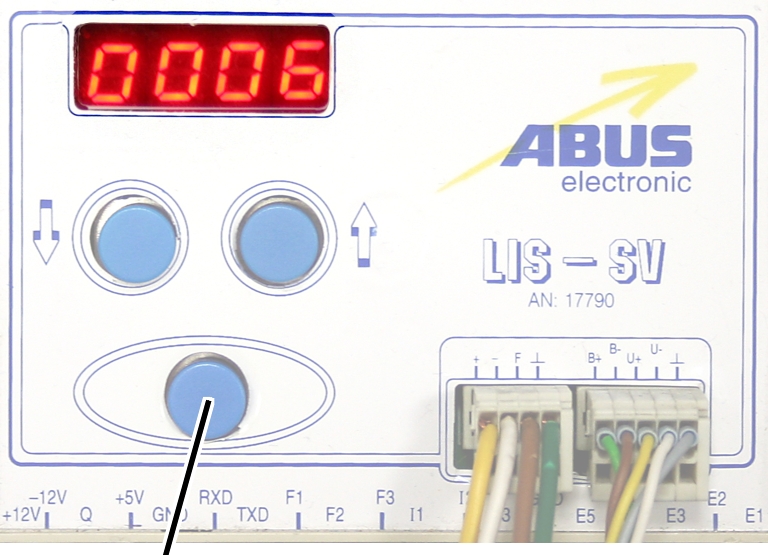
Enter
button |
Arrow
buttons |
Move the load hook out of
the limit switch range (up or down).
During parameter setting, the load hook must not be within the
limit switch range.
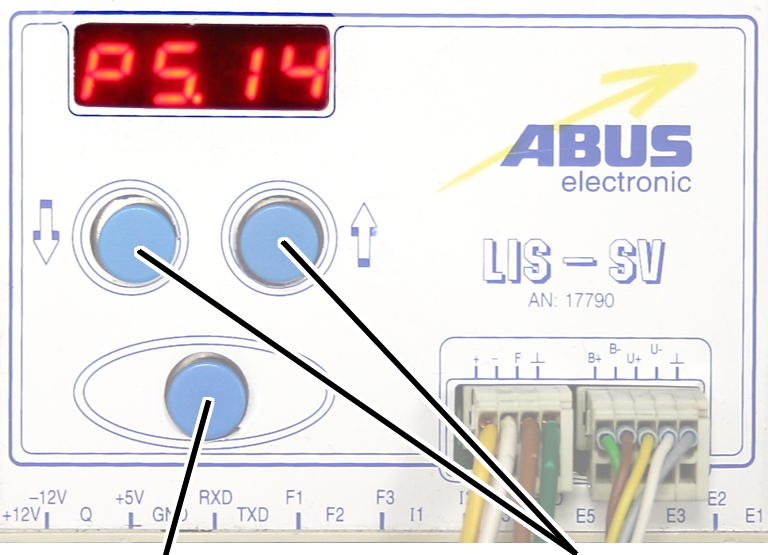
Select parameter 5.14.
Press ENTER.
● The set
value is displayed.
|
|
|
Enter
button |
|
Set the value to between 3
and 10 minutes using the arrow buttons.
Press ENTER.