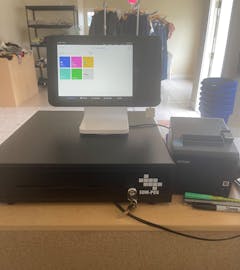
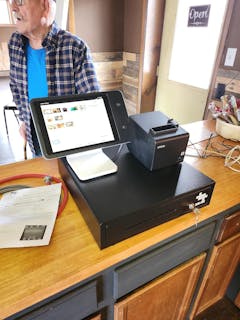

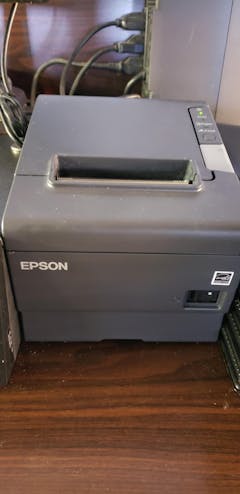
Awesome drawer! Wish I would have bought 3 more! Thanks
Great quality and easy to set up


But the SCPH-1000 had a hardware quirk. Its CD-ROM controller was slower than later models. This accidental timing flaw meant that the SCPH-1000’s BIOS often failed to detect LibCrypt correctly. As a result, the very console Sony designed to be unhackable became the without a mod chip.
For 30 years, the boot sequence of the original Sony PlayStation has been a ritual. But before the swirling polygons, before the "Sony Computer Entertainment America presents" text, there is a silent ghost. It lives in a 512-kilobyte mask ROM chip on the motherboard. It has no name on the box. It is the .
The console is dead. Long live the BIOS. scph-1000 bios
Unlike Nintendo’s cartridge-based systems, the PlayStation was an open-audit CD-ROM drive. Anyone could burn a disc. Sony’s BIOS had to act as a ruthless bouncer. It contained the —a check for the physical authentication groove pressed into every official PlayStation CD. No wobble? No boot.
If the BIOS finds a disc but fails the wobble check, you don't get an error message. You get the —a dark orange background where the logo should be. No text. No music. Just the hum of a confused laser. But the SCPH-1000 had a hardware quirk
And it is one of the most fascinating, fragile, and legally explosive pieces of code ever written. When Sony released the SCPH-1000 in Japan on December 3, 1994, it wasn’t just the first PlayStation—it was the most over-engineered console in history. It featured high-end audio components (RCA jacks, S-Video, an optical audio out) because Sony secretly wanted it to double as a high-fidelity CD player.
Only the SCPH-1000 BIOS contains the original CD playback logic—the one that could read a disc's subchannel data with surgical precision. If you want to emulate a niche game like Tales of Phantasia or Vib-Ribbon perfectly, you don’t use a later BIOS. You use the 1994 original. Pop in Final Fantasy VII . The BIOS reads the wobble. It loads the disc’s executable. It hands control to the game. As a result, the very console Sony designed
That is its beauty. It is the perfect silent partner: a 512KB sliver of 1994 Japanese engineering that has outlived its creators, outlasted its legal protections, and become the most replicated, studied, and beloved piece of firmware in gaming history.